
CASE STUDY
When the road closed, they rode anyway.
How AIDS/LifeCycle turned a canceled event into a stronger, more sustainable fundraising model.
When California’s COVID-19 stay-at-home orders canceled their annual 545-mile ride, AIDS/LifeCycle faced a moment that could have stalled everything.
Cailin Corbett, then Senior Director of Fundraising & Community Engagement, made a call, and what her team built became a permanent part of how the organization operated digital fundraising from then on.
$2.8M
Raised during the most disruptive year in the program’s history
NEW
Audiences reached through a global partnership
ONE
Fully digital campaign built from scratch
At Home Heroes
Launched as a permanent fundraising program
THE CHALLENGE
A 545-mile ride with nowhere to go.
For decades, AIDS/LifeCycle’s fundraising depended on a single, powerful moment: a 7-day ride from San Francisco to Los Angeles.
Then, with covid-19, the event disappeared over night.
Thousands of participants, critical funding, and a mission that could not pause.
The question was not whether to adapt.
It was whether something this complex could be rebuilt fast enough to matter.
"If you want to challenge yourself both mentally and physically while being surrounded by some of the most caring and encouraging people, then this is the ride for you. You really do become a part of a family."
— Drew Hazelhurst, TogetherRide Participant
THE APPROACH
Built from scratch. Launched with conviction.
With no virtual fundraising playbook for an event this size, Cailin made the bold choice to build something new instead of scaling back.
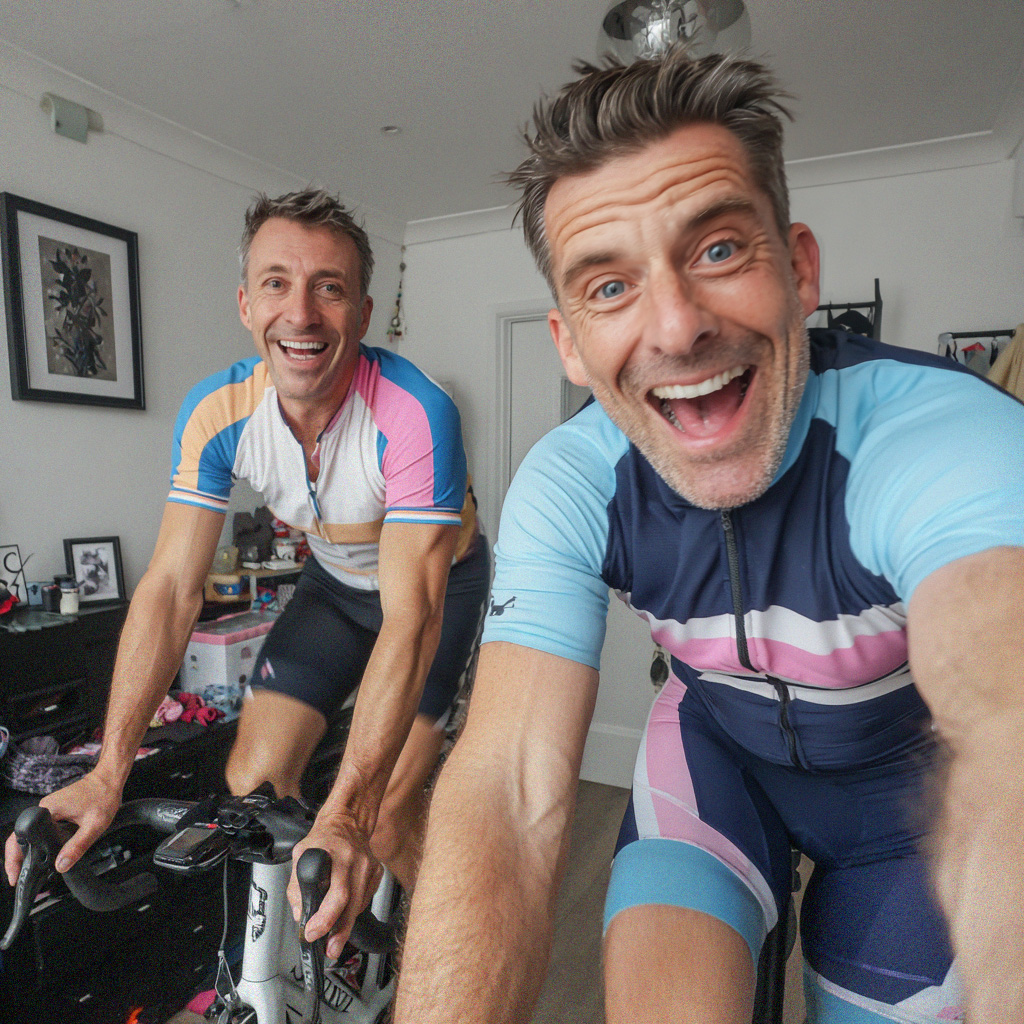
Working alongside her existing staff, she designed and executed TogetherRide, which was to be a fully digital, gamified at-home movement challenge, anchored to a meaningful goal. To honor the 1.2 million people living with HIV/AIDS in the United States, the goal was set for participants to traverse 1.2 million miles together and raise $5 million for HIV testing, prevention, and care. A mile for every person.
Cailin set a clear priority: the new digital tools had to feel celebratory, and nonthreatening for staff and participants alike. Participants could ride any bike (road, cruiser, e-bike, stationary) or even log miles from walking, running, or dancing. The app they rolled out synced with Strava, Apple Health, and Google Fit. There was no fundraising minimum. All ages welcome. She removed every barrier she could find, because she understood that participation, even modest participation, was how donors would stay engaged.
Given that the format drastically changed, Cailin and her team focused on making sure that the participant trust didn't.
Build something new. Keep the trust intact.
Remove barriers to entry
No fundraising minimum. Multiple ways to participate. Anyone could join from anywhere.
Design for participation first
The goal was 1.2 million miles for 1.2 million people living with HIV/AIDS. The mission was built into the experience.
Protect the relationships
Each participant still had a dedicated rep. The format changed. The trust didn’t.
Expand reach intentionally
A partnership with Zwift brought the campaign to a global audience for the first time.
THE RESULTS
Not perfect.
But, powerful and lasting.
TogetherRide raised $2.8 million against a $5 million goal.
But as is often the case, the number is not the full story.
What mattered most:
- Critical services continued during the disruption
- New supporters joined who had never participated before
- A fully new fundraising channel proved it could work
When the in-person ride returned, the virtual program did not disappear.
It evolved into At Home Heroes, which became a permanent part of AIDS/LifeCycle’s fundraising system.
THE SHIFT
This is what changed.
They did not replace an event.
They reduced their dependence on one.
What started as a response became infrastructure.
WHY THIS MATTERS
Events feel like the foundation.
They are not.
They are a vehicle.
When fundraising relies on one moment, the system is fragile. When it is built on relationships and participation, it can keep moving, even when conditions change.
This work showed what is possible:
Fundraising that continues beyond a single event
Participation that builds long-term supporters
Systems that hold under pressure
If your flagship event disappeared tomorrow, would your fundraising still move forward?
If not, it is worth building something that can.
We help organizations build fundraising that holds.

Contact us
david@missionleap.co
cailin@missionleap.co