
CASE STUDY

When the road closed, they rode anyway.
How AIDS/LifeCycle turned a canceled event into a completely new fundraising channel.
When California's stay-at-home Covid orders canceled their annual ride, AIDS/LifeCycle didn't pause. Cailin Corbett, then Senior Director of Fundraising & Community Engagement, made a call, and what her team built became a permanent part of how the organization operated digital fundraising from then on.
The Challenge
A 545-mile ride with nowhere to go.
Since 1993, AIDS/LifeCycle had supported 42,000 participants in raising over $200 million in service of the Los Angeles LGBT Center and the San Francisco AIDS Foundation.
Then COVID-19 arrived. This flagship event, which was a fully-supported, seven-day, 545-mile cycling journey from San Francisco to Los Angeles, was canceled. For an organization built on community movement, this was an existential moment. There were thousands of registered participants, and it provided critical funding that both beneficiary organizations depended on. It was a mission that couldn't afford to go quiet.
The question wasn't whether to adapt. It was whether adaptation was even possible at this scale and under these conditions.
The Approach
Built from scratch.
Launched with conviction.
With no virtual fundraising playbook for an event this size, Cailin made the bold choice to build something new instead of scaling something back.
Working alongside her existing staff, she designed and executed TogetheRide, which was to be a fully digital, gamified at-home movement challenge, anchored to a meaningful goal. To honor the 1.2 million people living with HIV/AIDS in the United States, the goal was set for participants to traverse 1.2 million miles together and raise $5 million for HIV testing, prevention, and care. A mile for every person.
Cailin set a clear priority: the new digital tools had to feel celebratory, and nonthreatening for staff and participants alike. Participants could ride any bike (road, cruiser, e-bike, stationary) or even log miles from walking, running, or dancing. The app they rolled out synced with Strava, Apple Health, and Google Fit. There was no fundraising minimum. All ages welcome. She removed every barrier she could find, because she understood that participation, even modest participation, was how donors would stay engaged.
Given that the format drastically changed, Cailin and her team focused on making sure that the participant trust didn't.
In the early weeks of the campaign, Dan, a supporter in Ohio who had watched the ride from afar for years but was never able to join in-person, logged his first miles under the AIDS/LifeCycle banner. TogetheRide was already reaching people the original event could not.
To extend the campaign's reach further, Cailin's team secured a partnership with Zwift, the virtual training platform that turns indoor cycling into a multiplayer experience. On June 13, Zwift hosted "TogetheRide by AIDS/LifeCycle" events across their global platform, bringing the mission to riders who had previously never heard of the organization.
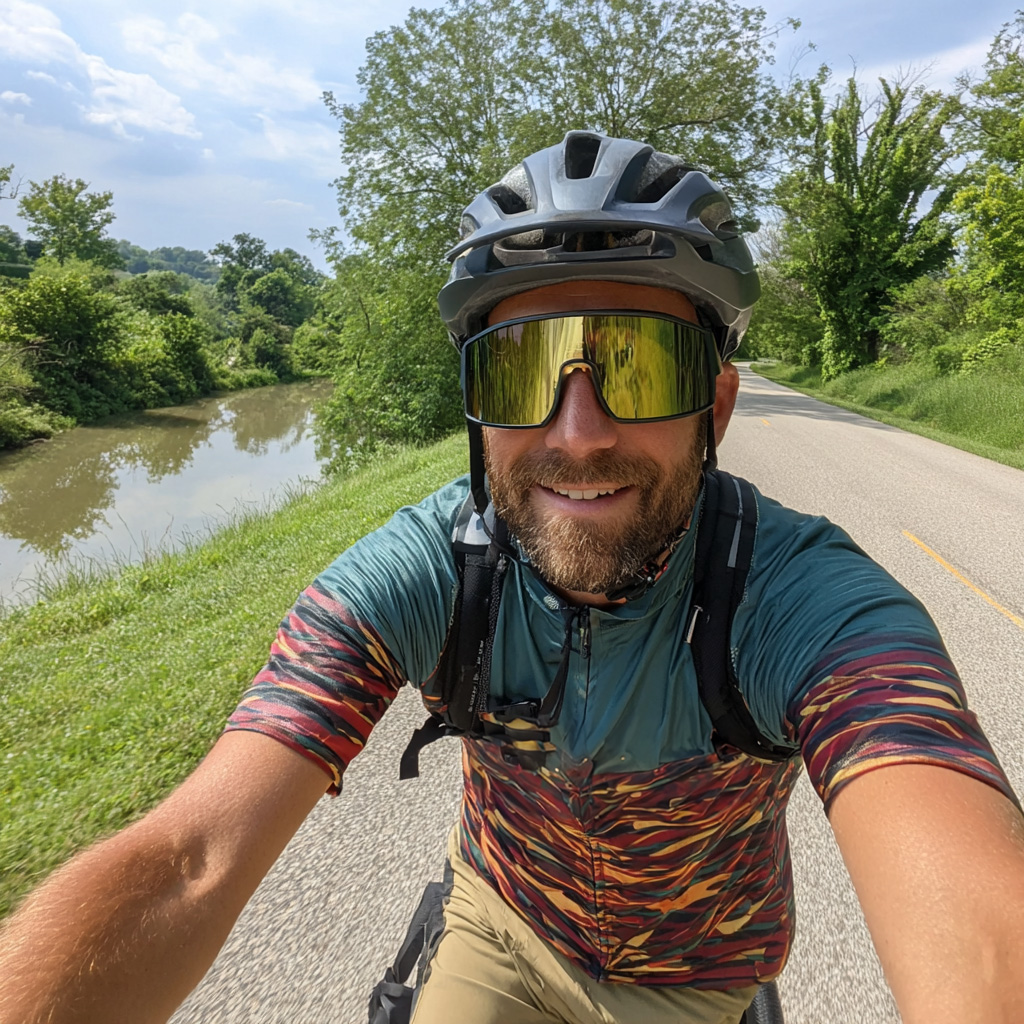
"If you want to challenge yourself both mentally and physically while being surrounded by some of the most caring and encouraging people, then this is the ride for you. You really do become a part of a family."
— Drew Hazelhurst, TogetherRide Participant
The Results
They didn't hit every number, but they built something that lasted.
TogetheRide launched under maximum uncertainty: a novel format, a separated community, goals set with ambition rather than precedent. The campaign raised $2.8 million against a $5 million target, and fell short of the 1.2 million mile goal. But for an organization that had never run a virtual campaign at this scale, $2.8 million was far from a near-miss, it was proof of concept.
What the money did, and what the campaign became, is the real measure.
The funds kept critical services running at both beneficiary organizations through the longest disruption in the event's history. The Zwift partnership brought new audiences to the mission. Supporters who could never join a 545-mile California ride found their way in for the first time.
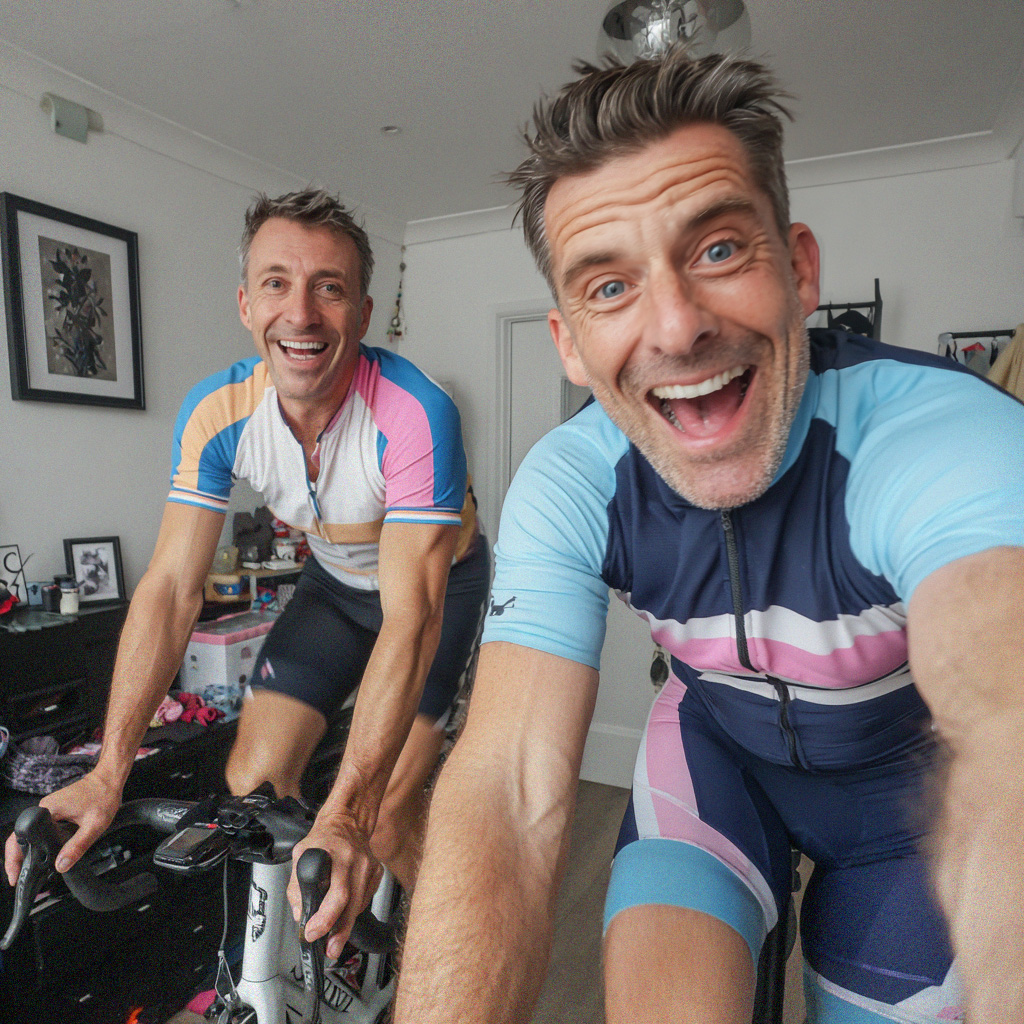
When the in-person ride returned, Cailin and her team didn't retire the virtual program. They grew it into At Home Heroes, a permanent fixture in AIDS/LifeCycle's fundraising ecosystem, designed for supporters who wanted to participate on their own terms, from anywhere in the world.
And that's the result they are proud of. In the end it wasn't about the numbers that were or were not hit. It was about creating an additive fundraising mechanism, a new program that didn't exist before, built under pressure, evaluated honestly, and woven permanently into the organization's infrastructure.
That was the Mission Leap.
They didn't just replace an event. They removed their dependence on one, instead turning a single point of failure into a system that could hold year-round.
Why This Matters
Events feel like the foundation. They're not.
They're a vehicle.
If your fundraising depends on one moment, it's fragile. If it's built on relationships, it can hold, even in the toughest of times. In many ways, TogetheRide proved that, and At Home Heroes confirmed it.
We've seen what happens when organizations treat their flagship event as the foundation of their fundraising. When the event is healthy, everything's fine. When it isn't (canceled, underperforming, disrupted) the whole system wobbles.
What Cailin and her team built was evidence of a different way: organize around community identity instead of a single moment on the calendar, and you will always have a path forward.
She built, she didn't substitute.
When the event disappeared, Cailin didn't scale back. She created something new alongside her team — and it outlasted the crisis that required it.
Symbolism as strategy.
1.2 million miles for 1.2 million people. The goal was more than a fundraising target, it was a reason to finish.
The format changed, but the trust didn't.
Every design decision was made to preserve the peer-to-peer relationships that had always been the real engine of AIDS/LifeCycle's fundraising.
Crisis as R&D.
TogetheRide didn't end when the pandemic did. It became At Home Heroes, an aditive to the infrastructure the organization could leverage.
If your flagship event disappeared tomorrow, would your fundraising hold?
If it didn't, what would you build instead?
We help organizations build the answer before they need it. Fundraising that doesn't lurch between feast and famine. Fundraising that holds.
Your content goes here. Edit or remove this text inline or in the module Content settings. You can also style every aspect of this content in the module Design settings and even apply custom CSS to this text in the module Advanced settings.

Contact us
david@missionleap.co
cailin@missionleap.co